
TSFDC has entrusted CIPS to prepare a comprehensive development plan for enhancing its overall performance with a strategic vision for 15 years. This project aims to strengthen and enhance the functioning of TSFDC administratively, financially, and technically and by effective management of Human Resources & Strengthening in TSFDC.
The comprehensive plan encompasses the following key components:
Development of “Eco-Tourism” models for investment, including Kothaguda RF
Telangana’s forests, wildlife, hills, waterfalls, and cultural heritage offer immense potential for nature-based tourism. Recognising Telangana state’s rich biodiversity and natural landscapes, CIPS has designed a plan for TSFDC which emphasises on sustainable development that protects natural resources while creating economic opportunities for local communities. It also highlights the importance of integrating local culture, festivals, and traditions into eco-tourism activities to enhance visitor experiences and support community participation.
The plan identifies key eco-tourism destinations across Telangana, including Kanakagiri Hills, Anantagiri Hills, Bogatha Waterfalls, Eturunagaram, Amarabad and Kawal Tiger Reserves, Manjeera Sanctuary, Kuntala Waterfalls, Shamirpet Deer Park, Pakhal Sanctuary, and Nagarjunasagar Backwaters. Proposed activities include trekking, nature walks, forest bathing, bird and wildlife watching, jungle safaris, cycling, hiking, and nature photography, which are designed to minimise ecological impact while promoting environmental awareness and physical wellbeing. The plan stresses the need for market research, SWOT analysis, tailored business strategies, and stakeholder partnerships to ensure that eco-tourism offerings are competitive, sustainable, and aligned with visitor expectations. Ultimately, the eco-tourism plan aims to generate income, jobs, and inclusive growth while conserving Telangana’s natural ecosystems and providing meaningful, responsible tourism experiences.
Trade Models for Teak, Sandalwood and Red Sanders grown in Private Lands
The report “Trade Models for Teak, Sandalwood and Red Sanders grown in Private Lands” provides a detailed examination of the cultivation, ecological characteristics, growth requirements, and market dynamics of Teak, Sandalwood, and Red Sanders in India. It highlights the historical significance of these species, their economic and cultural value, and the various environmental and biological factors that influence their growth, such as soil conditions, climate, pests, diseases, and regeneration challenges.
The report emphasises the strategic role of the Telangana State Forest Development Corporation (TSFDC) in strengthening agroforestry-based livelihoods by supporting the cultivation and marketing of Teak, Sandalwood, and Red Sanders by acting as a facilitator, educator, and marketing agency by establishing a Centre of Excellence, developing species-specific guidelines, offering consultancy services, and ensuring transparent market linkages. By investing in research, promoting best practices, advocating for supportive policies, and helping farmers navigate regulatory processes, TSFDC can reduce market barriers and enhance the value chain. The report highlights that implementing these strategic interventions will not only improve the cultivation and sustainable management of high-value tree species but also generate financial benefits for farmers, contribute to environmental sustainability, and strengthen Telangana’s agroforestry sector.
Improvement of productivity from Eucalyptus clonal plantations which may include controlling of weed menace, introduction of mechanization in harvesting and marketing of Eucalyptus timber / Pulpwood and Bamboo products
The document“Improving the Productivity of Eucalyptus Clonal Plantations, Mechanization and Marketing of Eucalyptus” provides an in-depth analysis of eucalyptus cultivation in India, with a focus on the role of TSFDC. The document outlines the history of eucalyptus introduction, its importance to the pulp and paper industry, and the development of improved breeding, cloning, and transgenic approaches. It identifies challenges such as disease incidence, nutrient depletion, declining yields, and weed infestation and highlights the need to replace multi-generation plantations with superior, disease-resistant clones. Integrating nitrogen-fixing species, using biochar to restore soil fertility, and adopting improved irrigation and disease-management practices are presented as essential strategies for enhancing plantation performance.
A major focus of the report is on sustainable weed control, combining preventive, mechanical, live mulch, and soil solarization methods which help suppress weed growth, maintain soil health, and create favourable conditions for eucalyptus development.
The document further highlights the growing importance of mechanization in eucalyptus harvesting and management. It details the use of excavators, backhoe loaders, bulldozers, power chain saws, drum-based debarkers, and loading cranes, which collectively reduce labour dependency, minimize wastage, and enhance operational efficiency. By integrating improved clones, sustainable soil and weed management, and modern mechanization, this report provides a practical and actionable framework for improving eucalyptus productivity.
Sustainable plantation models within the proposed Regional Ring Road (RRR)
The report “Sustainable Plantation Models for the RRR” outlines a holistic framework for developing ecologically resilient and economically viable plantations along Hyderabad’s Regional Ring Road. It describes Telangana’s climatic context, TSFDC’s evolving focus on eco-restoration and biodiversity, and challenges such as declining eucalyptus productivity and growing threats from pests, diseases, invasive species, and climate stress. The report recommends a comprehensive plantation strategy that includes site assessment, use of native species, diverse planting models, improved soil and water management, long-term maintenance, and community participation. It also emphasises partnerships with government bodies, corporates, and NGOs for funding and technical support, as well as regular monitoring and educational outreach. Based on lessons from TSFDC’s plantations along the Outer Ring Road, the study provides guidance on species selection, nursery practices, and resource productivity, underscoring TSFDC’s central role in building sustainable green infrastructure across Telangana.
A Skeletal Framework for Establishing a Centre of Excellence for Agroforestry and Bamboo
The report “A Skeletal Framework for Establishing a Centre of Excellence for Agroforestry and Bamboo” highlights the immense potential of agroforestry and bamboo-based systems in Telangana and marks their importance in addressing agricultural, environmental, and livelihood challenges. It explains how agroforestry improves soil health, conserves nutrients, reduces erosion, enhances biodiversity, and contributes to food, fodder, energy, and climate security. By integrating trees with crops and livestock, agroforestry offers ecosystem services such as carbon sequestration, microclimate improvement, sustainable fodder supply, and diversified farm incomes. The framework also stresses agroforestry’s role in mitigating climate change, supporting rural livelihoods, and restoring degraded lands through systems such as the silvi-pastoral model.
The concept note further identifies key barriers—including research gaps, weak policy support, restrictive regulations, market limitations, and supply chain bottlenecks- that hinder wider adoption of agroforestry in India. To address these, it proposes the establishment of a Centre of Excellence that will drive research, develop region-specific agroforestry models, strengthen market and supply chain systems, promote policy reforms, and support farmer capacity building. For the bamboo sector, the Centre will facilitate high-quality germplasm development, bamboo clusters and industrial parks, advanced technologies like DNA fingerprinting, value addition, training for artisans, etc. The proposed Centre of Excellence aims to catalyse sustainable agroforestry and bamboo development, enabling long-term environmental, economic, and social benefits.
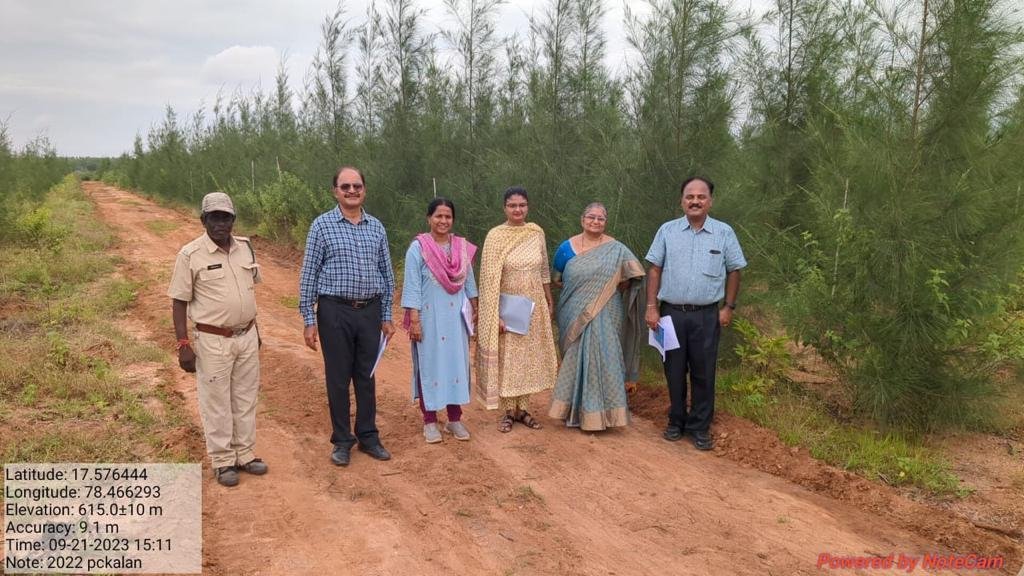
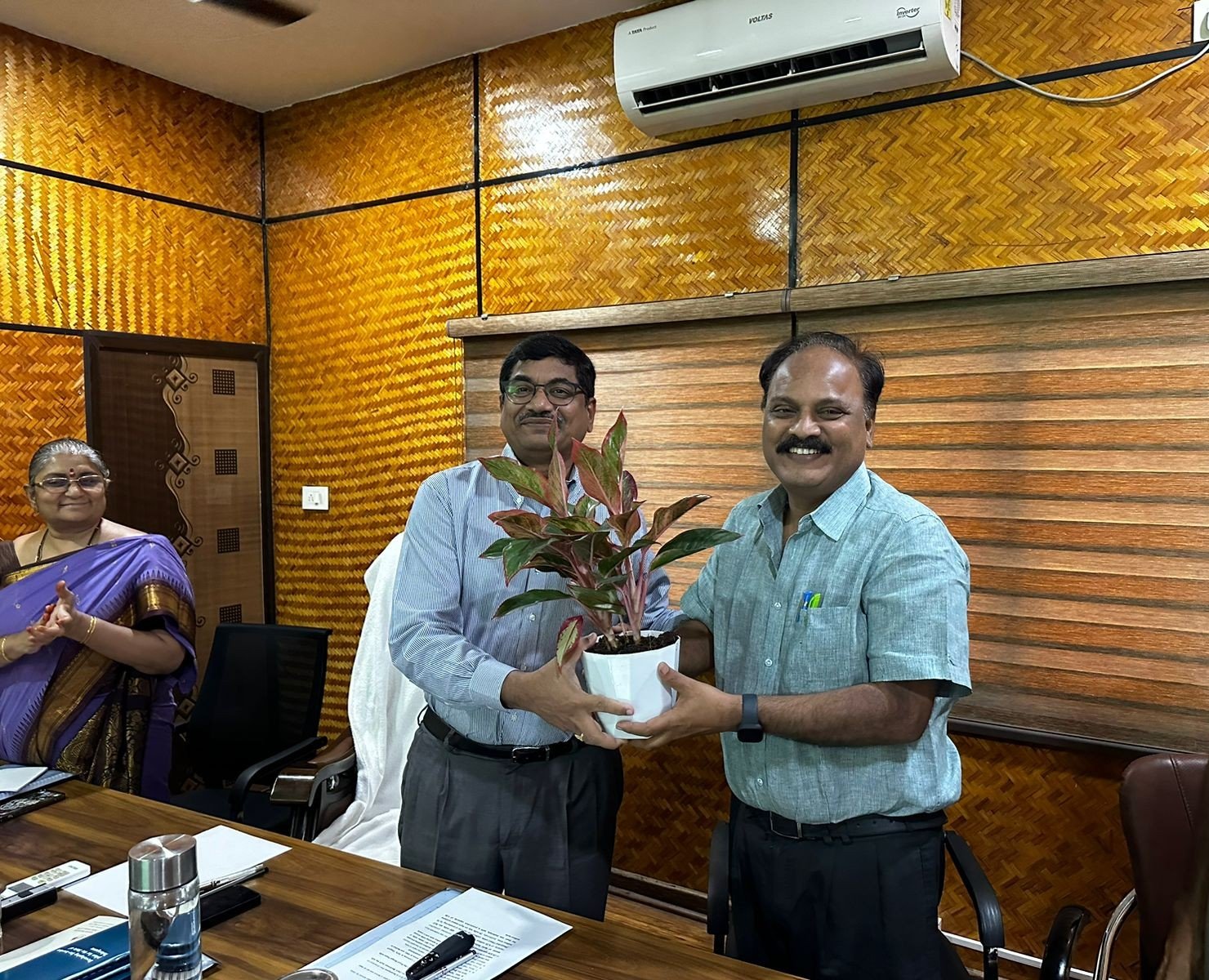 Sri Hemanth Kumar, IFS (Retd), advisor, Dr Valli Manickam, Director CIPS with Dr G Chandrashekar Reddy, IFS, VC&MD, TSFDC